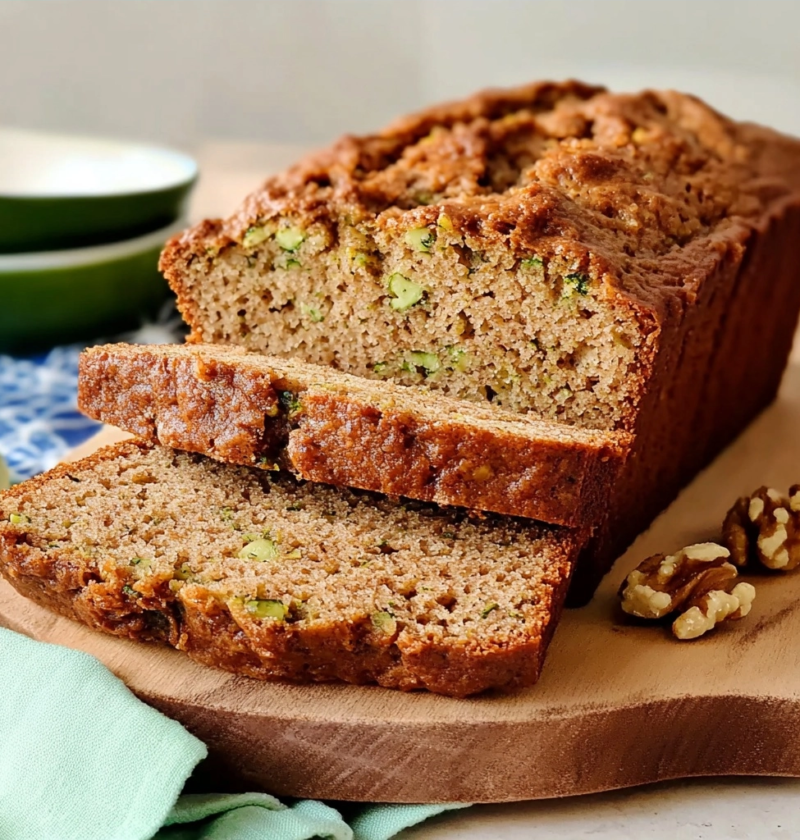
Zucchini bread is a dense, sweet quick bread that relies on grated vegetables for natural moisture. This reliable loaf delivers a tender crumb and rich cinnamon spice without feeling heavy. Home bakers love it for breakfast, snacking, or sharing with neighbors. The simple mixing method guarantees consistent results every weekend.
| Detail | Information |
|---|---|
| Prep Time | 15 minutes |
| Cook Time | 45 minutes |
| Total Time | 1 hour |
| Servings | 16 slices |
| Difficulty | Easy |
| Cuisine | American |
| Category | Beverages & Bakes |
| Method | Oven Baking |
Why This Recipe Works
This loaf succeeds because the careful balance of leavening agents and fat creates a consistently tender crumb that never turns dense or dry. Relying on vegetable oil instead of butter keeps the crumb soft for days, while the precise sugar ratio ensures a gentle caramelization without overwhelming the natural vegetable flavor. The combination of baking powder and baking soda handles the quick rise needed for this dense batter, producing an even rise without collapsing in the center. Properly preparing the vegetables and folding them gently into the wet mixture preserves moisture while maintaining the ideal structural integrity. Finally, allowing the loaf to rest in the pan before cooling completely prevents sudden temperature shocks that cause cracking.
First, sifting the dry ingredients beforehand eliminates small lumps and ensures the cinnamon distributes evenly throughout the batter. This simple step removes air pockets that would otherwise create uneven tunnels in the finished slice. Next, beating the eggs, oil, sugar, and vanilla thoroughly creates an emulsion that locks moisture into the flour structure. When you mix the wet and dry components together, stopping as soon as the flour disappears prevents gluten development that toughens the texture.
The recipe also benefits from a lower baking temperature of three hundred twenty-five degrees. This gentle heat allows the center to set slowly while the edges develop a golden crust without burning. Baking at a higher temperature often leaves a gummy middle or an overly thick, hard exterior. The prolonged bake time also encourages natural sugars to caramelize slightly, enhancing the overall depth of flavor without adding extra sweetness.
Finally, cooling the bread correctly transforms the final product from good to exceptional. Leaving the loaf in the pan for twenty minutes allows the structure to firm up gradually. Inverting it onto a wire rack afterward promotes even airflow around the bottom and sides, preventing condensation that makes the crust soggy. This deliberate cooling process guarantees a clean slice that holds its shape on the dinner plate.
Chef Tips for Perfect Results
Avoid common baking pitfalls by following these precise culinary guidelines that consistently elevate your quick bread outcome.
-
Squeeze the vegetables thoroughly: Place shredded zucchini in a clean kitchen towel and wring out excess liquid before measuring. Removing surplus moisture prevents a soggy center and ensures the batter maintains the correct ratio for a proper crumb structure.
-
Beat the wet ingredients fully: Use an electric mixer on medium speed to combine the eggs, oil, sugar, and vanilla until the mixture looks pale and uniform. This emulsion traps air bubbles that expand during baking, giving the loaf a light texture despite the heavy flour base.
-
Govern the mixing time carefully: Fold the dry ingredients into the wet mixture using a sturdy spatula and stop mixing the moment no dry streaks remain. Overworking the batter activates gluten proteins, which transforms a tender loaf into a chewy, rubbery brick.
-
Grease the pans generously: Butter or spray two eight-by-four loaf pans, then dust them with a thin layer of flour or cocoa powder. This double coating creates a non-stick barrier that guarantees the bread releases cleanly without sticking to the metal.
-
Test for doneness early: Insert a wooden toothpick into the center of the loaf at the forty-minute mark. If clean crumbs come out, the bread is ready. A wet batter coating means you need five additional minutes, while dark crumbs indicate overbaking.
-
Control oven temperature accurately: Place an oven thermometer on the middle rack to verify your appliance reaches three hundred twenty-five degrees. Home ovens frequently run ten to fifteen degrees hotter or cooler than the dial setting, which drastically affects rise and browning.
-
Chop the nuts uniformly: Cut walnuts into roughly half-inch pieces before folding them into the batter. Consistent pieces distribute evenly throughout each slice and provide reliable crunch without dominating the flavor profile.
Common Mistakes to Avoid
Preventing baking failures requires recognizing the specific errors that consistently ruin texture, flavor, and structural integrity.
| Mistake | Why It Happens | How to Fix It |
|---|---|---|
| Batter is too runny | Adding too much un-squeezed liquid from the vegetables | Measure the shredded vegetable after squeezing, or reduce the added oil by one tablespoon |
| Center stays gummy | Baking at too high a temperature or under-baking time | Lower the oven to three hundred twenty-five degrees and extend baking by ten minutes |
| Surface cracks severely | Overmixing the batter or filling the pan completely full | Fold ingredients gently and fill pans only halfway to allow proper expansion |
| Crust burns before center sets | Exposure to direct top heat without proper shielding | Loose a sheet of aluminum foil over the crust after twenty-five minutes of baking |
| Bread tastes bland | Skipping the vanilla extract or under-measuring cinnamon | Always measure spices by level teaspoons and add three teaspoons of pure vanilla extract |
| Loaf sticks to pan | Inadequate greasing or removing bread while still hot | Coat pans thoroughly and wait twenty minutes before running a knife around the edges |
Variations and Substitutions
Customize this reliable base recipe to match dietary preferences, seasonal ingredient availability, or specific flavor cravings.
| Ingredient or Element | Substitution or Variation | Impact on Flavor or Texture |
|---|---|---|
| Shredded zucchini | Grated yellow summer squash or peeled diced apple | Delivers similar moisture retention but adds a slightly sweeter, milder autumn flavor profile |
| Vegetable oil | Melted refined coconut oil or light olive oil | Maintains the tender crumb structure while introducing a subtle, neutral fruity note |
| White sugar | Organic cane sugar or pure maple syrup | Enhances the overall depth and adds a gentle caramel undertone that pairs beautifully with cinnamon |
| Chopped walnuts | Diced pecans or skipped entirely | Pecans offer a richer, buttery crunch, while removing nuts creates a purely soft, cake-like texture |
| Ground cinnamon | Ground ginger or pumpkin pie spice blend | Introduces a warmer, spicier aromatic profile that complements the natural sweetness of the vegetables |
| All-purpose flour | Whole wheat pastry flour or oat flour blend | Reduces the final sweetness slightly and adds a nutty, heartier bite while maintaining structural integrity |
| Vanilla extract | Almond extract or omitted entirely | Almond extract boosts the nutty flavor notes, while skipping it leaves the cinnamon and vegetable as the primary focus |
Serving Suggestions and Pairings
Serving this warm loaf maximizes the aromatic release of cinnamon and creates the perfect balance with complementary beverages and sides.
-
Top each slice with a thin smear of unsalted butter that slowly melts into the warm, moist crumb.
-
Pair the bread with a fresh cup of black coffee to cut through the natural sweetness and highlight the spice notes.
-
Serve alongside a crisp green apple salad tossed with a light honey-lemon dressing for contrast.
-
Dip the warm slices in a small bowl of cold chamomile tea for a gentle, caffeine-free afternoon treat.
-
Spread a layer of creamy peanut butter or sunflower seed butter to add satisfying protein and savory balance.
-
Accompany the loaf with a side of fresh berries and unsweetened whipped cream for a brighter, lighter presentation.
-
Toast thick slices and top with dairy-free yogurt and a sprinkle of toasted oats for a hearty breakfast option.
-
Pair with a glass of chilled cold-brewed chai latte to echo the warm spices baked into the loaf.
-
Serve with a small dish of room temperature cream cheese to enhance the rich, dense texture.
-
Present alongside a fresh orange or grapefruit segment to provide a bright, acidic contrast to the sweet crumb.
Consider building a complete weekend brunch spread by placing this loaf in the center of a wooden board, surrounded by small glass jars of mixed preserves, a bowl of fresh fruit, and a carafe of sparkling water infused with mint leaves. This arrangement encourages guests to customize their own plates while offering a visually appealing, balanced spread that feels both elegant and comfortably homey.
Make Ahead Options
You can successfully prepare this bread well before serving by focusing on proper wrapping techniques and controlled storage environments. Assemble the batter on a Sunday morning, pour it into the prepared pans, and cover the surfaces tightly with plastic wrap. Store the unbaked pans directly in the refrigerator for up to twenty-four hours. This extended rest time actually improves the final texture by allowing the flour to fully hydrate and the cinnamon to bloom within the oil base.
If you prefer a completely baked product, bake the loaves completely, allow them to cool on wire racks for two full hours, and then wrap each loaf individually in heavy-duty aluminum foil followed by a layer of plastic wrap. Store the wrapped loaves at room temperature for up to three days, or transfer them to the freezer for up to three months. Freezing stops the staling process almost entirely, preserving the tender crumb and moisture levels until you are ready to thaw and serve.
When it is finally time to serve, unwrap the frozen or refrigerated loaf and let it sit at room temperature for sixty minutes. This gradual warming process prevents condensation from forming on the crust, which would otherwise make the exterior gummy. Slicing the bread only after it reaches ambient temperature ensures clean cuts that hold their shape perfectly on the serving plate.
Storage and Reheating
Proper storage methods preserve the moisture and flavor profile of this quick bread while preventing mold growth and texture degradation.
| Method | Duration | Instructions |
|---|---|---|
| Room Temperature | Up to 3 days | Store in an airtight container with a slice of white bread to absorb excess moisture |
| Refrigerator | Up to 5 days | Wrap tightly in plastic wrap first, then place in a resealable bag to prevent drying |
| Freezer | Up to 3 months | Wrap whole loaves in foil and plastic wrap, label with the baking date |
| Reheating | Two minutes per slice | Warm in a microwave on medium power or toast in a three hundred fifty-degree oven |
| Make Ahead | Up to 24 hours | Keep unbaked batter covered in the refrigerator before pouring into greased pans |
Nutritional Information
Approximate values are based on one serving and may vary depending on exact ingredients and portion size.
| Nutrient | Amount per Serving |
|---|---|
| Calories | 285 kcal |
| Protein | 4 g |
| Fat | 12 g |
| Saturated Fat | 1.5 g |
| Carbohydrates | 42 g |
| Fiber | 1.5 g |
| Sugar | 24 g |
| Sodium | 320 mg |
Frequently Asked Questions
Can I substitute vegetable oil with another healthy fat option?
You can successfully replace vegetable oil with an equal amount of applesauce or melted coconut oil. Applesauce reduces the overall fat content significantly, resulting in a lighter, cakier texture that still retains moisture. Coconut oil provides a nearly identical fat profile and keeps the crumb tender without altering the neutral flavor profile.
How do I know for certain when the loaf is perfectly baked?
The toothpick test remains the most reliable method for checking internal doneness. Insert a thin wooden stick into the deepest center of the loaf and pull it straight out. Clean crumbs indicate a perfectly baked interior, while wet batter requires additional baking time in five-minute increments.
Why does my bread turn out dense and heavy instead of light?
Dense texture usually stems from overmixing the batter after adding the flour. Excessive stirring develops gluten strands that create a tough, compact crumb structure. Always fold the ingredients gently until the last streak of flour disappears, and ensure your leavening agents are fresh and fully active.
Is it safe to prepare this recipe a full day before baking?
Yes, preparing the batter twenty-four hours ahead actually improves the final flavor and texture. The extended refrigeration period allows the spices to fully infuse the oil, and the flour hydrates completely. Keep the batter tightly covered in the pan and bake it directly from the refrigerator, adding five minutes to the standard bake time.
What is the best way to serve this loaf for a large group?
Slicing the cooled loaf into uniform half-inch pieces and arranging them on a tiered serving platter works best for entertaining. Dust the exposed cut sides lightly with powdered sugar to enhance visual appeal. Pairing the arrangement with small bowls of dairy-free jam or nut butter allows guests to customize each bite according to their personal taste preferences.
How should I properly store leftover slices to prevent them from drying out?
Place each cooled slice between sheets of parchment paper inside a rigid airtight container to maintain structural integrity. Store the container on the counter away from direct sunlight to preserve moisture without encouraging mold growth. Always consume the bread within three days for the optimal soft crumb texture.
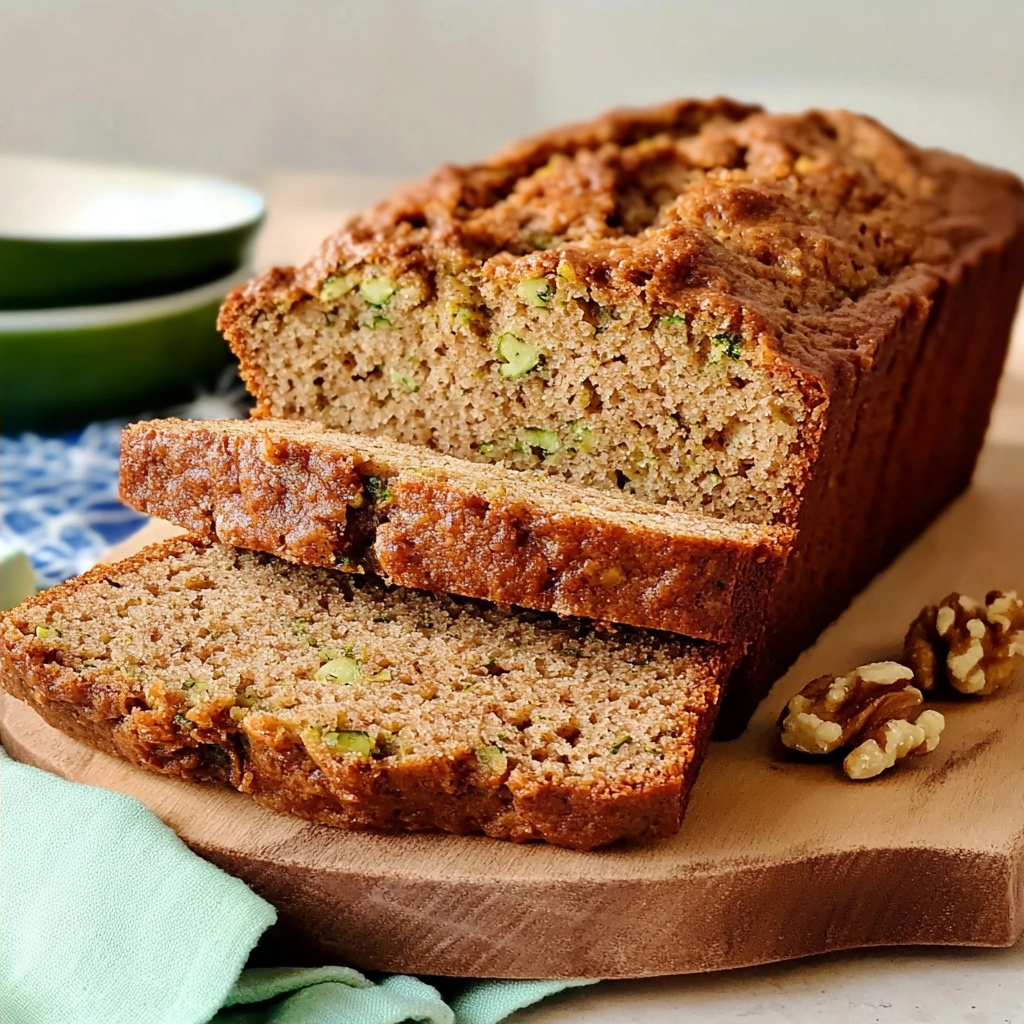
Zucchini Bread That Stays Moist and Delicious
Ingredients
Method
- Preheat oven to 325°F (160°C)
- Grease a 9x5-inch loaf pan with oil
- In a medium bowl, sifting flour, baking powder, baking soda, cinnamon, nutmeg, and salt
- In a large bowl, whisk eggs, oil, sugar, and vanilla until fully emulsified
- Folding dry ingredients into wet until no flour streaks remain
- Stir in zucchini
- Pour batter into prepared loaf pan
- Bake 45 minutes or until a toothpick inserted into center comes out clean
- Let cool in pan for 20 minutes before inverting onto a wire rack
Nutrition
Notes
Cooled completely before slicing to maintain structure
Optional: Add 1/2 cup walnuts or raisins for extra texture and flavor
Store in airtight container at room temperature up to 7 days